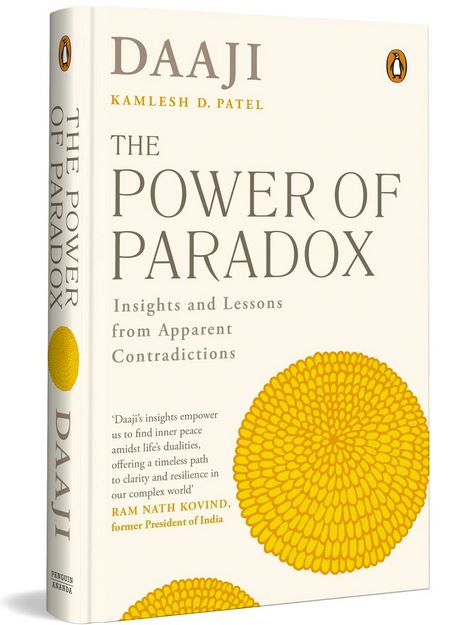
Paradox is a very interesting concept. And when Daaji published his latest book The Power of Paradox on 1st January, I was more than excited to gain some nuggets of wisdom that would be a guiding force in life situations.
The Cambridge dictionary defines the word paradox as “a statement or situation that may be true but seems impossible or difficult to understand because it contains two opposite facts or characteristics”.
It’s a very intriguing concept. Depending the type of paradox we are facing, it may result in stress dilemma and confusion. As Daaji says – understanding paradoxical statements requires us to put a pause on normal logic and push the boundaries of our thinking.
Consider the conversation in this figure. The man on the left is saying – “I am lying”.
If we were to trust his sentence, then his statement is a lie. So, what he is saying is the truth. This would mean that he is actually NOT lying. And this is in apparent contradiction to what he is saying in the first place.

So, such situations make us think deeper. They demand inquiry, observation and reflection.
In our lives, too, we face many exceptionally challenging situations. Building a reflective self-discovery can help us in in overcoming such negative emotions with mental clarity and peaceful hearts, leading to cultivation of wisdom. I have just started reading the book. Daaji has explored 27 paradoxes that we encounter in our day-to-day lives. He will be helping me to understand these paradoxes better by using a fresh perspective of spiritual and scientific inquiry.
I will also try to include any of other related references from ancient Indic texts where applicable.
 Abhijit Pandit
Leave a comment