Here Daaji makes a reference to the popular poem by William Wordsworth written in 1807
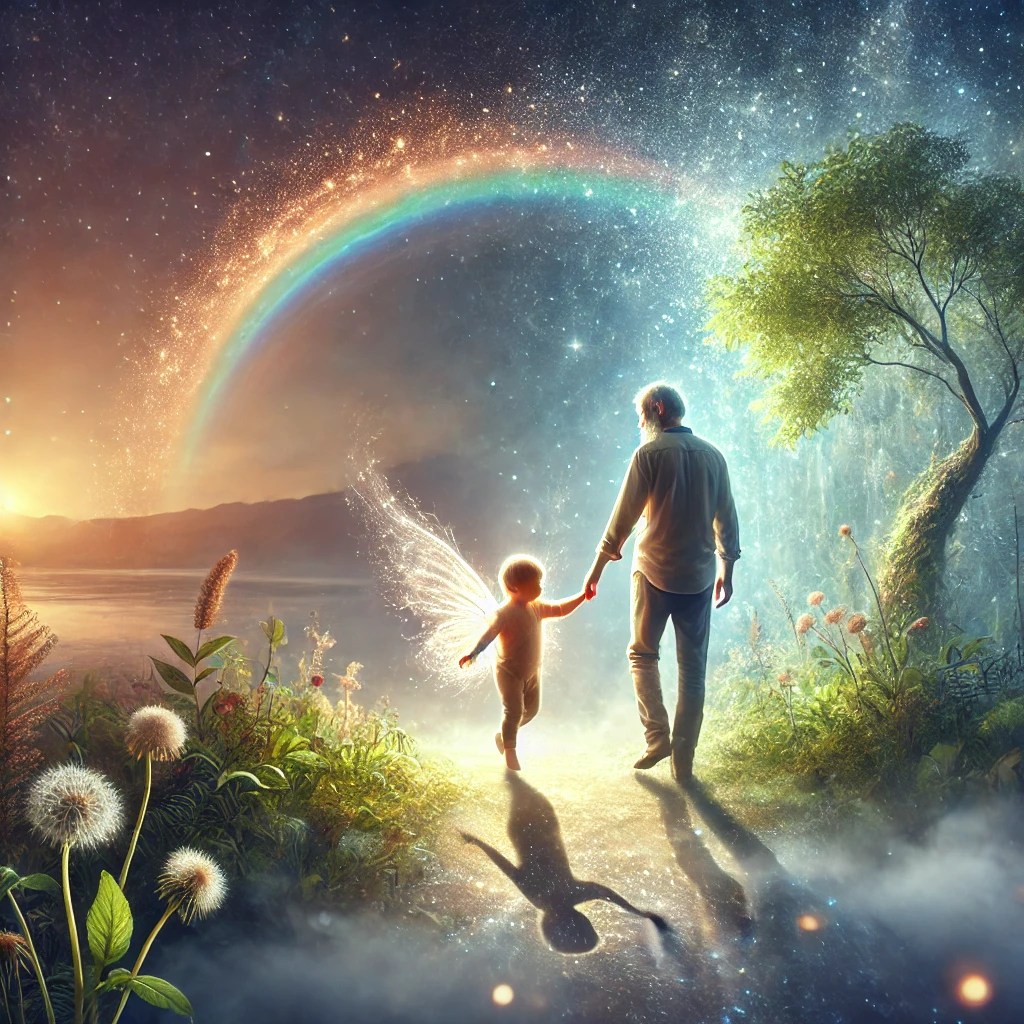
My heart leaps up when I behold
A rainbow in the sky:
So was it when my life began;
So is it now I am a man;
So be it when I shall grow old,
Or let me die!
The Child is father of the Man;
And I could wish my days to be
Bound each to each by natural piety.
The poem essentially implies that who we are as children lays the foundation of who we are as adults. Our adulthood is born out of experiences and perceptions as children. And that depiction, even though paradoxical, that the child is a father of the Man, makes perfect sense.
At every stage in his life, the poet sees the rainbow and at every such time he is filled with wonder. The experience of watching the rainbow is so reverent that it’s an almost spiritual experience.
The poet also diligently hopes not to lose this natural piety or sense of the Divine Presence in the natural world no matter how old he becomes.
As a child our minds are very innocent and open. It is through interpreting the world that we begin to lose our inherent purity and innocence. Daaji says – if we continue to immerse ourselves in an environment of natural wonder, where observation, experience and learning are positive, we can maintain that naturalness. Yet even if we didn’t have the privilege of such an environment during our childhood, neuroplasticity allows us to develop that sense of wornder later in life. This, Daai says, presents a paradox between the seemingly permanent effects of upbringing and the brain’s ability to change and adapt, suggesting that our essence is both malleable and enduring.
 Abhijit Pandit
Leave a comment